
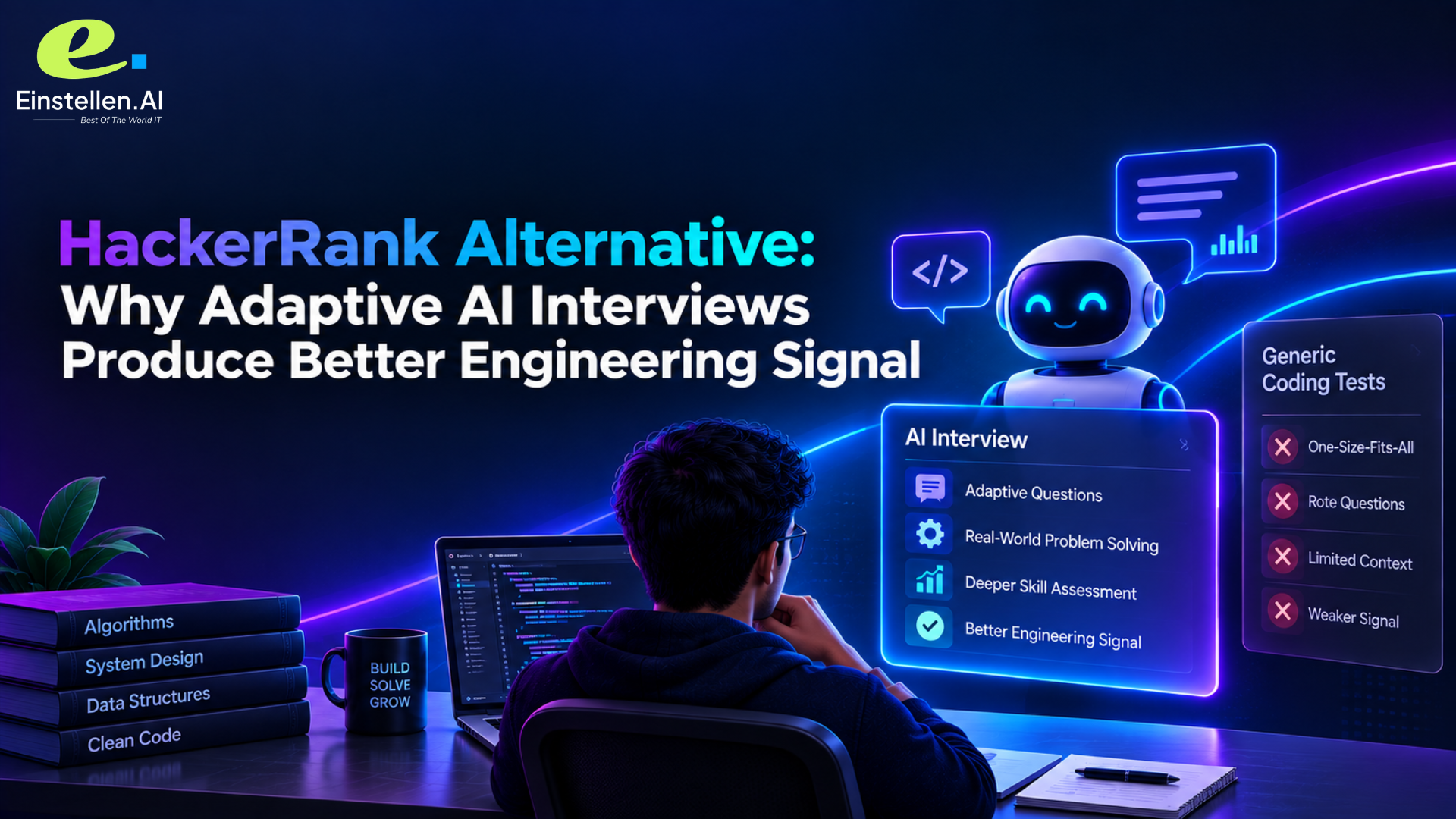
Quick Answer: HackerRank tests code correctness under time pressure, and it does that well. An adaptive AI interview tests something different: thinking quality, whether a candidate can justify architectural decisions and hold up under follow-up pressure in real time. Most engineering roles beyond algorithmic screening need both signals. Not one instead of the other.
If you're evaluating HackerRank alternatives right now, the real issue probably isn't a missing feature or a pricing tier. You've probably lived this exact scenario. A candidate scores in the 90th percentile on a HackerRank assessment, sails through the process, and then two weeks into the first sprint, you realize they can't explain why they picked a particular data structure or what happens to their solution once it hits real scale. The test wasn't wrong, exactly. It was just never built to answer that question in the first place. So if you're comparing HackerRank alternatives right now, the real issue probably isn't a missing feature or a pricing tier. It's that you need a second signal HackerRank was never designed to produce.
What HackerRank Actually Measures, and Why It's Genuinely Good at It
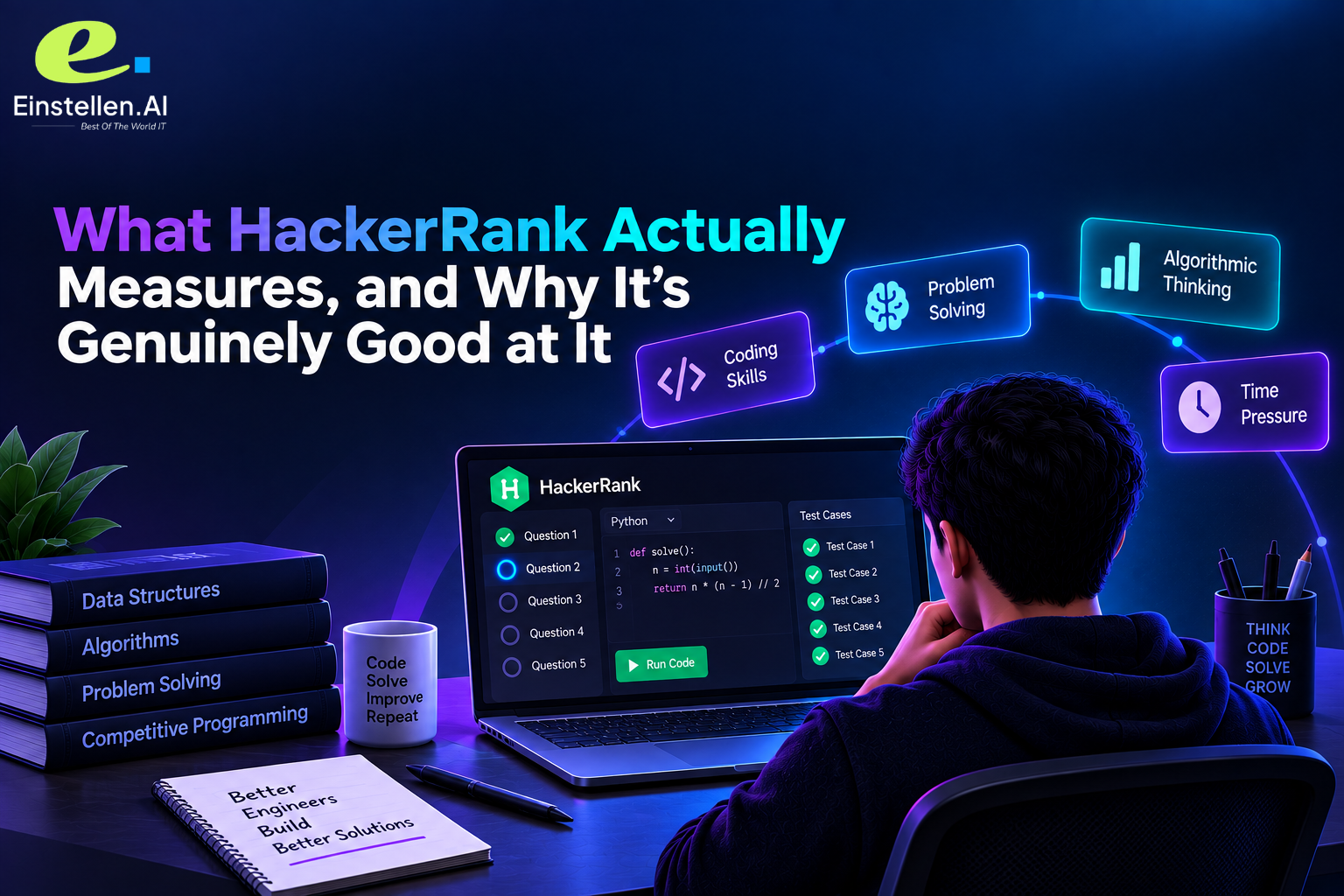
Credit where it's due here. HackerRank is excellent at testing whether someone can write correct code under time pressure. The pass/fail-per-test-case output is honest about what it's checking: your code either produces the right result on the given inputs, or it doesn't. That's not a black box. It's a correctness check, and it's labeled as one.
The platform also carries real credibility with developers. Millions of engineers have sat a HackerRank test at some point, so the format feels familiar rather than adversarial to most candidates walking in. The coding challenge library itself is deep and well-maintained across languages and difficulty levels.
For roles where the job really is raw algorithmic output, competitive programming hires, certain quant or low-latency trading positions, HackerRank is simply the right tool. Nobody needs to be talked out of using it there. The real question isn't whether HackerRank works. It's whether code correctness is the only thing your role actually needs to measure.
Read More: AI Interview vs Video Interview: What's Actually Different
The Real Gap: Code Correctness vs. Thinking Quality
Here's the distinction that actually matters, said plainly. HackerRank measures code correctness: can this person produce working code that clears a defined set of test cases? An adaptive AI interview measures thinking quality: can this person explain the architectural call they made, reason through trade-offs out loud, and go deeper when you push on a specific claim?
Look at how differently the questions are framed. A HackerRank test asks: "Write a function that sorts this array." An adaptive AI interview asks something more like: "You said you used quicksort here. For a dataset this size that's nearly sorted already, why not insertion sort? Walk me through that call." Then it actually evaluates what comes next.
The first question tells you the candidate can code. The second tells you whether they can think about the code they just wrote. For an algorithmic internship, maybe the first answer is enough on its own. But for a senior engineer who's going to own architecture decisions a whole team lives with for years, you need both signals, and most static test banks only ever give you one.
This isn't an abstract concern either; it's showing up industry-wide already. Korn Ferry's 12th Annual Talent Acquisition Trends survey of 1,674 global talent leaders found that 52% plan to add autonomous AI agents to their recruiting teams in 2026 — a shift that reflects growing pressure to assess candidates at volume without sacrificing evaluation depth. A follow-up question generated live, based on what someone just said, is a lot harder to outsource than a known problem type sitting in a public bank.
Why Adaptive Questioning Changes the Signal, Not Just the Format
Adaptive interviewing is fast becoming table stakes, not a novelty feature. Vendors like Eightfold and Braintrust now market AI interviewers that build follow-up questions from the previous answer instead of running a fixed script, precisely to keep evaluation consistent at scale while still probing for depth. The mechanism behind it matters a lot more than whatever the marketing calls it.
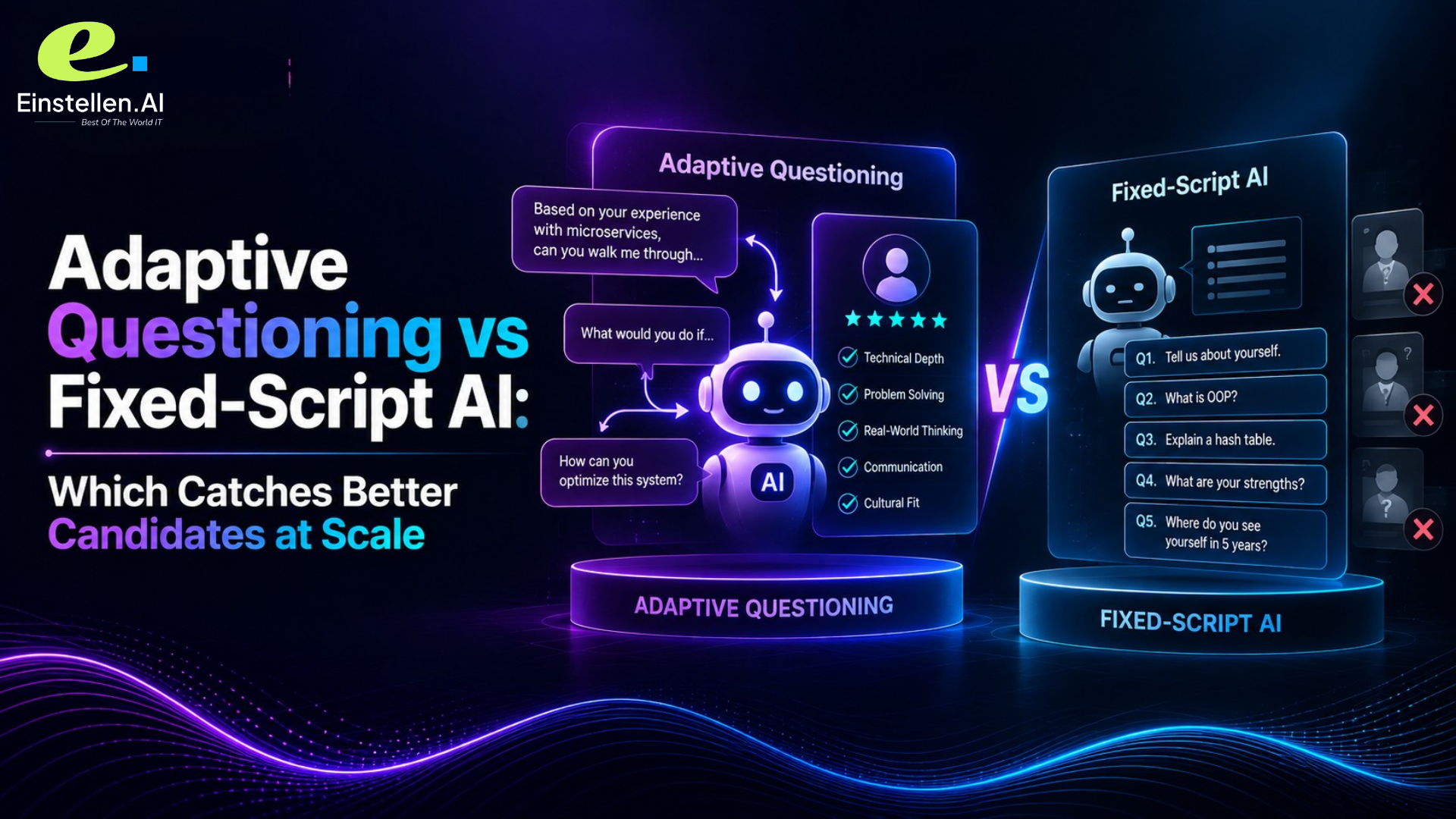
At Einstellen.AI, this runs through humAIn, the AI interview engine built into Magic OS. It listens to what a candidate actually says and builds the next question from that answer, rather than working through a checklist no matter how the conversation is going. Say a candidate gives a vague, hand-wavy answer about a specific project. The interview stays on that project and digs in, instead of moving on to the next scripted item as if nothing happened.
That's the practical difference from a static question bank. A leaked or memorized bank degrades over time as answers start circulating online. An adaptive interview can't really be "solved" the same way, because the next question depends on what was just said a moment ago, not on which question number happens to come next.
HackerRank Alternative: The Explainability Gap Most Comparison Pages Skip
Most "HackerRank alternative" roundups spend their word count comparing pricing tiers, proctoring features, and which ATS logos show up on the integrations page. Almost none of them touch what happens after the score gets produced: can the hiring manager actually see why a candidate scored the way they did, beyond a grid of pass/fail test cases?
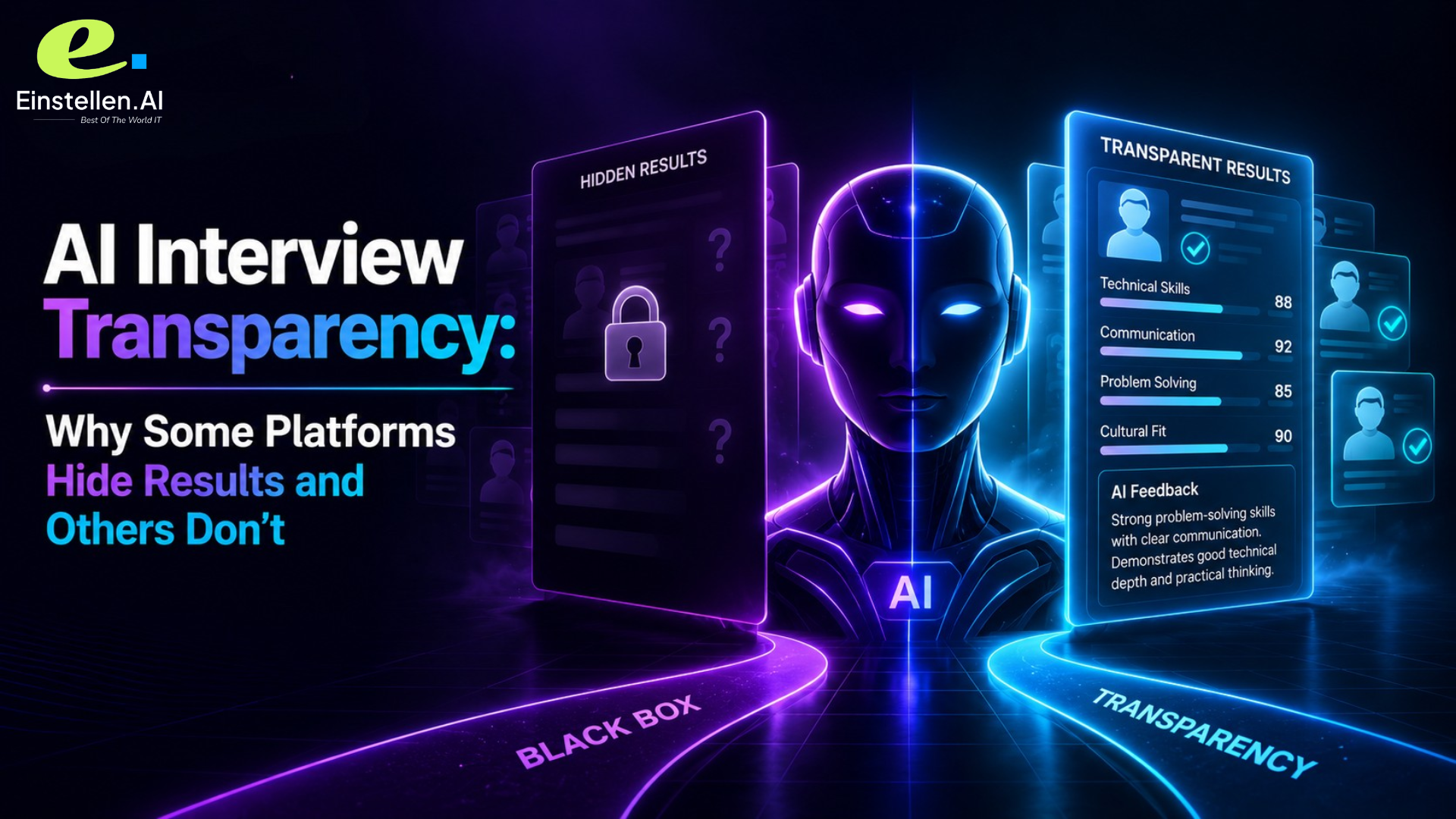
This is where a real gap sits in AI interviewing more broadly. A lot of AI-scored interview tools hand back a ranking with nothing behind it that you can actually inspect. That's the complaint TA heads keep raising, over and over, in conversations about AI interview tools: it's not that AI shouldn't be part of hiring. It's that a score with no justification isn't something you can defend in front of a hiring committee, let alone to a candidate you're rejecting.
 Einstellen.AI's MAGIC model produces a structured, justified score instead of handing back a bare number. Every interview generates a per-answer scored report with a full transcript, so a hiring manager looking at a borderline candidate can see exactly which answer drove which part of the score. Not just the final figure at the bottom.
Read More: Automated Candidate Screening: Why Explainable Scores Beat Black-Box Rankings
Pricing Transparency: The Other Thing Nobody Shows You
Nearly every competitor in this space, HackerRank alternatives included, gates its pricing behind a demo call. For a startup founder or an HR manager at a 50- to 200-person company trying to budget a hiring round, that's genuine friction before you've even had a real conversation.
Einstellen.AI's pricing is public and flat: ₹249 per interview, pay-as-you-go, whether you run one interview or ten thousand. No subscription, no contract, no volume negotiation, just to see the real number. Credits don't expire either, and the full report, video, transcript, skill scoring, and fraud detection are all included in every credit. No separate premium tier hiding behind it.
HackerRank Alternative: Comparing the Two Signals Side by Side
| Dimension | HackerRank-style coding test | Adaptive AI interview (Einstellen.ai) |
|---|---|---|
| Primary signal | Code correctness (pass/fail per test case) | Reasoning quality and trade-off justification |
| Question flow | Fixed problem bank | Adapts in real time to the candidate's last answer |
| Best fit | Competitive programming, algorithmic screening, quant roles | Mid-to-senior engineering roles requiring architectural judgment |
| Cheating risk | Static banks can circulate or be solved with outside AI help | Follow-ups generated live are harder to pre-solve |
| Score transparency | Transparent on correctness, not on reasoning | Per-answer scored report with full transcript |
| Pricing model | Demo-gated in most competitor tools | Flat ₹249/interview, no contract, credits never expire |
Proof Point: Einstellen.AI has conducted 150,000+ AI interviews across 1,200+ institutions, backed by IIM Lucknow and NASSCOM. TestCrew, a QA and IT services company, deployed Einstellen.AI's adaptive interview platform and saw review time per candidate drop from 30-45 minutes to 5 minutes, with hiring managers reporting 100% decision confidence because the evidence behind every score was visible and reviewable. Every score comes with a per-answer MAGIC Report and full transcript, at a flat ₹249 per interview with no contract.
FAQ
Is HackerRank good for technical interviews or just coding tests?
HackerRank is built primarily as a coding assessment tool: it checks whether submitted code passes a defined set of test cases under time constraints. It isn't designed to evaluate a candidate's reasoning process, architectural judgment, or ability to defend a decision under follow-up questioning. That's a different, complementary signal.
How do AI interview platforms prevent cheating better than static coding banks?
Static question banks are vulnerable because the questions are known and fixed, so they circulate. Adaptive interviews generate follow-up questions live, based on the candidate's own prior answer, which is much harder to pre-solve. Einstellen.AI's platform also builds fraud and proxy detection directly into the interview process itself.
What's the difference between a coding assessment and a technical interview?
A coding assessment checks whether code produces the correct output against test cases. A technical interview, especially an adaptive one, checks whether a candidate can explain their reasoning, justify trade-offs, and respond when pushed on a specific claim. Most engineering roles beyond entry-level algorithmic screening benefit from both.
Can AI-conducted interviews be trusted to evaluate engineers fairly?
It comes down to whether the score comes with a reason attached. A ranking with no accessible justification is the core complaint hiring teams raise about black-box AI interview tools. Einstellen.AI's MAGIC model pairs every score with a structured justification report and a full transcript, so the reasoning behind the evaluation is visible, not just asserted.
Ready to See the Difference in Your Own Pipeline?
If your current coding assessment tells you a candidate can write correct code but leaves you guessing whether they can defend a decision under pressure, that's the exact gap adaptive AI interviewing is built to close. Einstellen.AI's humAIn engine adapts to each candidate's actual answers, and every score comes with a full transcript and structured justification, never a bare number. Pricing stays flat at ₹249 per interview, no contract, no volume negotiation. Post your role on Einstellen.AI and see the MAGIC Report format for your first candidate before you commit to anything. Flat ₹249 per interview, no contract.







Leave a Comment
Share your perspective. Comments are moderated before publishing.