
Quick Answer: Adaptive AI bulk hiring uses agentic questioning that adjusts each interview in real time, so whether it's 1 candidate or 10,000, they get a relevant, deep conversation instead of a fixed script. Einstellen.AI has run 150,000+ AI interviews across 1,200+ institutions this way, with per-answer scored reports and fraud/proxy detection built into every round.
How agentic AI handles bulk hiring is a fundamentally different problem from how AI speeds up individual screening. The bottleneck at volume is not just time; it is signal quality, and that distinction matters. A campus placement cell running 3,000 interviews in a week doesn't have 3,000 hours of recruiter time sitting around. Neither does an enterprise TA team trying to clear a backlog of 800 applicants for one bulk hiring drive. The usual workaround has been a fixed-script AI interview: five identical questions no matter what the candidate says, so the round finishes quickly but tells you almost nothing about who's actually strong.
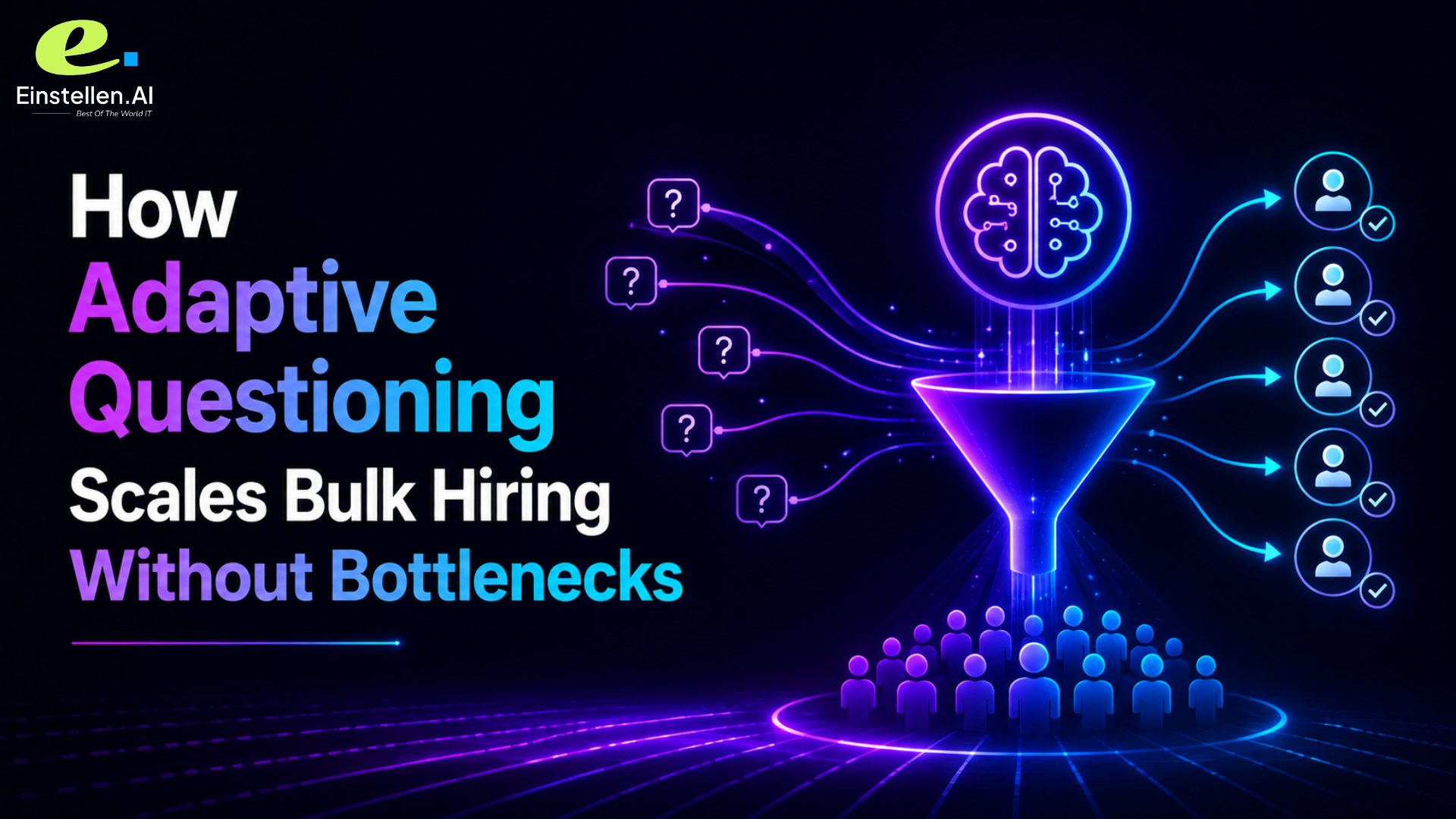
Adaptive AI bulk hiring solves the volume problem without bringing back the shallow-signal problem that fixed scripts create. The mechanism itself isn't complicated: the system listens to what a candidate actually says and generates the next question based on that answer, rather than marching through a checklist regardless of where the conversation goes. At scale, that means every interview in a 3,000-candidate batch still digs deeper exactly where a specific answer calls for it, rather than every single person getting the same five generic prompts.
How Does Agentic AI Work for Recruitment
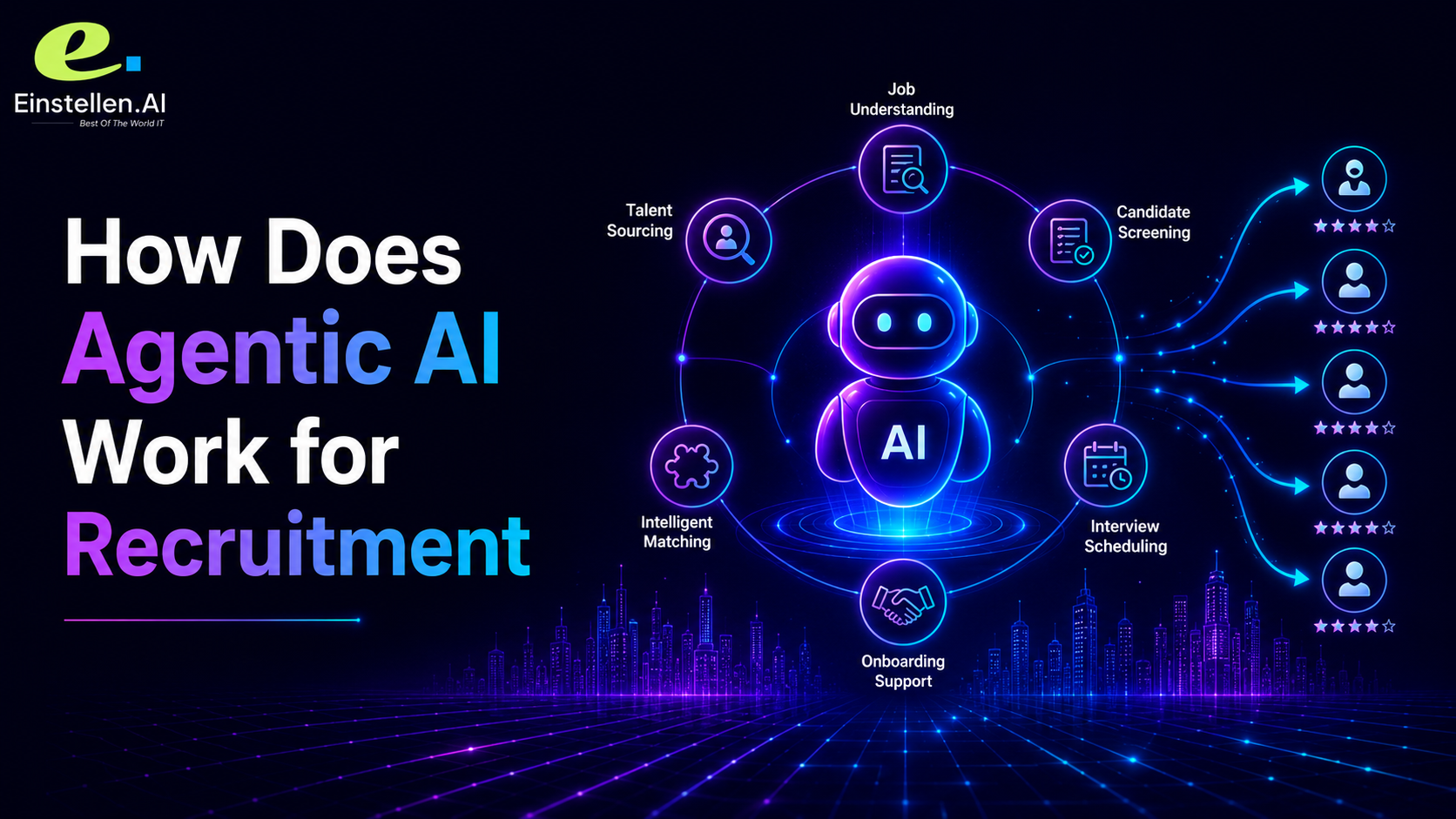
Agentic AI in recruitment means the interview engine decides what to ask next after hearing the response, not before the interview even starts. Einstellen.AI's humAIn engine listens to a candidate's actual answer and builds the next question from what was just said. Say a candidate gives a vague answer about a specific project. The system will push on that project rather than jumping to an unrelated item from a script.
That's a different animal from branching logic or a decision tree stocked with pre-written follow-ups. A fixed-script tool, even a "smart" one with a few conditional branches, is still pulling from a finite, pre-written question bank somewhere. Agentic questioning generates the next question live, straight from the content of the answer just given.
For a hiring manager, this shows up concretely in the report. Instead of a flat list of five answers to five identical questions repeated across every candidate, the transcript shows an actual line of inquiry: an opening question, a vague or interesting response, and a specific follow-up that exists only because of what that particular person said. That's the raw material a structured justification report is built from, and it's also why the MAGIC model can point to exactly which answer drove which part of a score.
Why Fixed-Script AI Interviews Break Down at High Volume
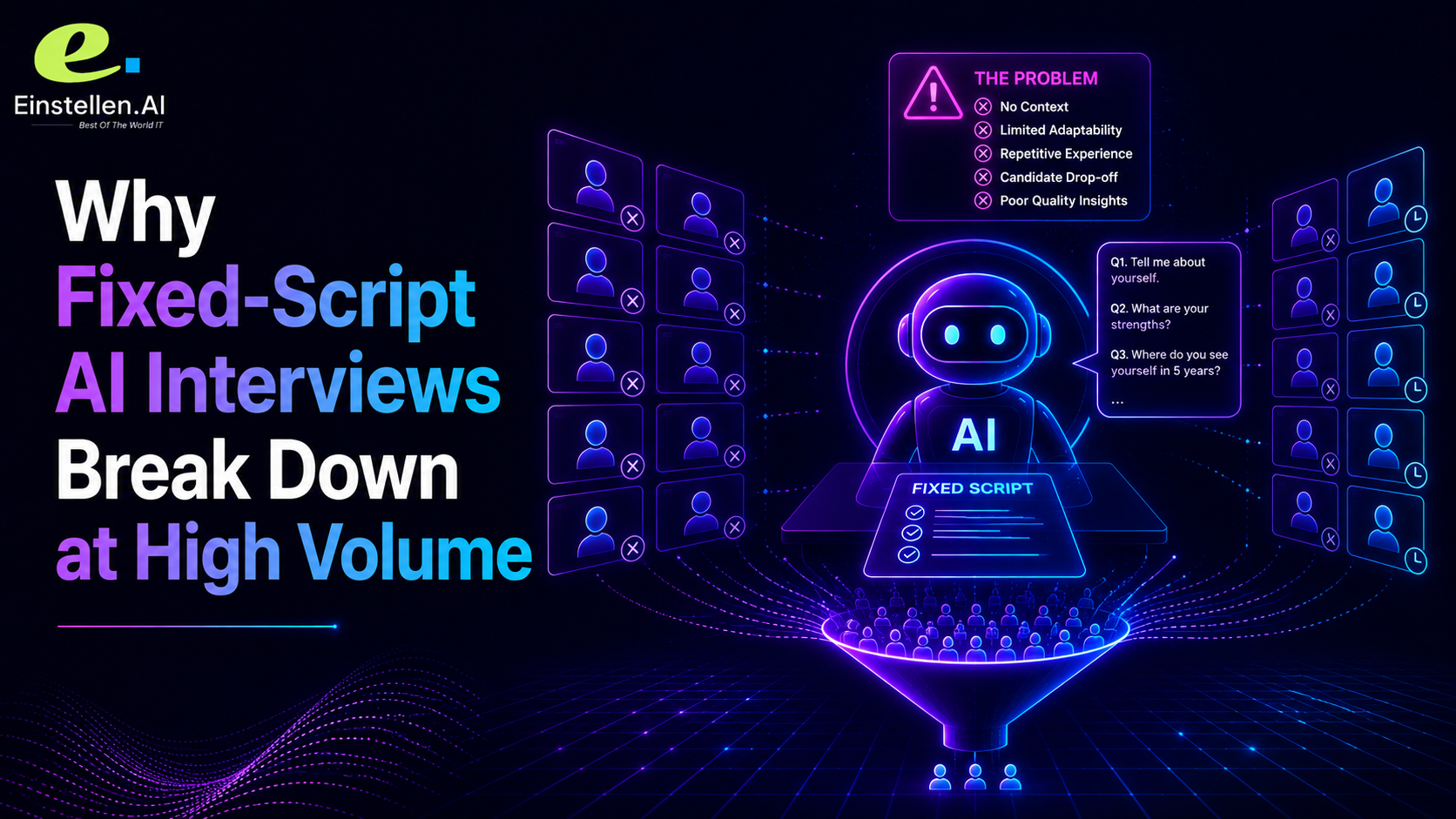
Why Fixed-Script AI Interviews Break Down at High Volume Fixed-script tools look efficient at volume, because every candidate gets processed the same way. The trouble shows up later, when a hiring manager tries to compare two candidates who both nailed the same five questions on paper but performed completely differently on the job.
A static checklist can't tell a strong, detailed answer apart from a rehearsed, surface-level one to that same fixed prompt, simply because the interview never asked a follow-up to find out which was which. This is the exact pattern TA Heads describe when they talk about moving away from other AI interview platforms: rankings that don't line up with actual on-the-job performance, because the interview never went deep enough to generate real signal in the first place.
At bulk-hiring volume, this compounds fast. A 2,000-candidate campus round using a fixed script produces 2,000 shallow transcripts. An adaptive round of the same size produces 2,000 transcripts, each one going deeper on whatever that specific candidate happened to reveal, and it doesn't add a single minute of recruiter time to the process.
Explainable Scoring at Scale
Volume only helps if the scores coming out the other end are trustworthy enough to act on without having to re-check every borderline case by hand. Einstellen.AI's MAGIC OS model produces a structured, justified score for every interview, whether the batch is 10 people or 10,000, because the justification gets generated per answer as part of the same process that produces the score.
In practice, this means a hiring manager reviewing a shortlist of 40 finalists pulled from a 2,000-candidate bulk round can open any one report and see exactly which answer drove which part of the result. Not just a ranked number sitting there with no reasoning attached. That's a genuinely different review process than sorting a spreadsheet of opaque scores and hoping the top 40 really are the top 40.
This matters even more at high volume because manual spot-checking becomes impractical beyond a few hundred candidates. No recruiter is re-interviewing 2,000 people to sanity-check an AI ranking. What they can do instead is trust a score that already comes with a reviewable, per-answer explanation, and spend their limited review time on the genuinely borderline cases the reports surface.
Fraud and Proxy Detection in High-Volume Rounds
Bulk hiring rounds, especially campus placement drives run remotely across hundreds of colleges, are exactly where interview fraud tends to slip through unnoticed. A recruiter looking at thousands of submissions has no realistic way to manually confirm the person on camera is the person who applied.
Einstellen.AI's platform integrates fraud and proxy detection directly into the interview process, making it especially relevant for high-volume use cases such as campus placements and bulk enterprise hiring rounds. The exact detection mechanics stay general in anything public-facing on purpose, since spelling out specifics would hand bad actors a way around them. But the practical point for a TA head planning a bulk round is that integrity checks run automatically at the same scale as the interviews themselves, with no manual verification step tacked onto each candidate.
ATS Screening Automation Without a New Workflow
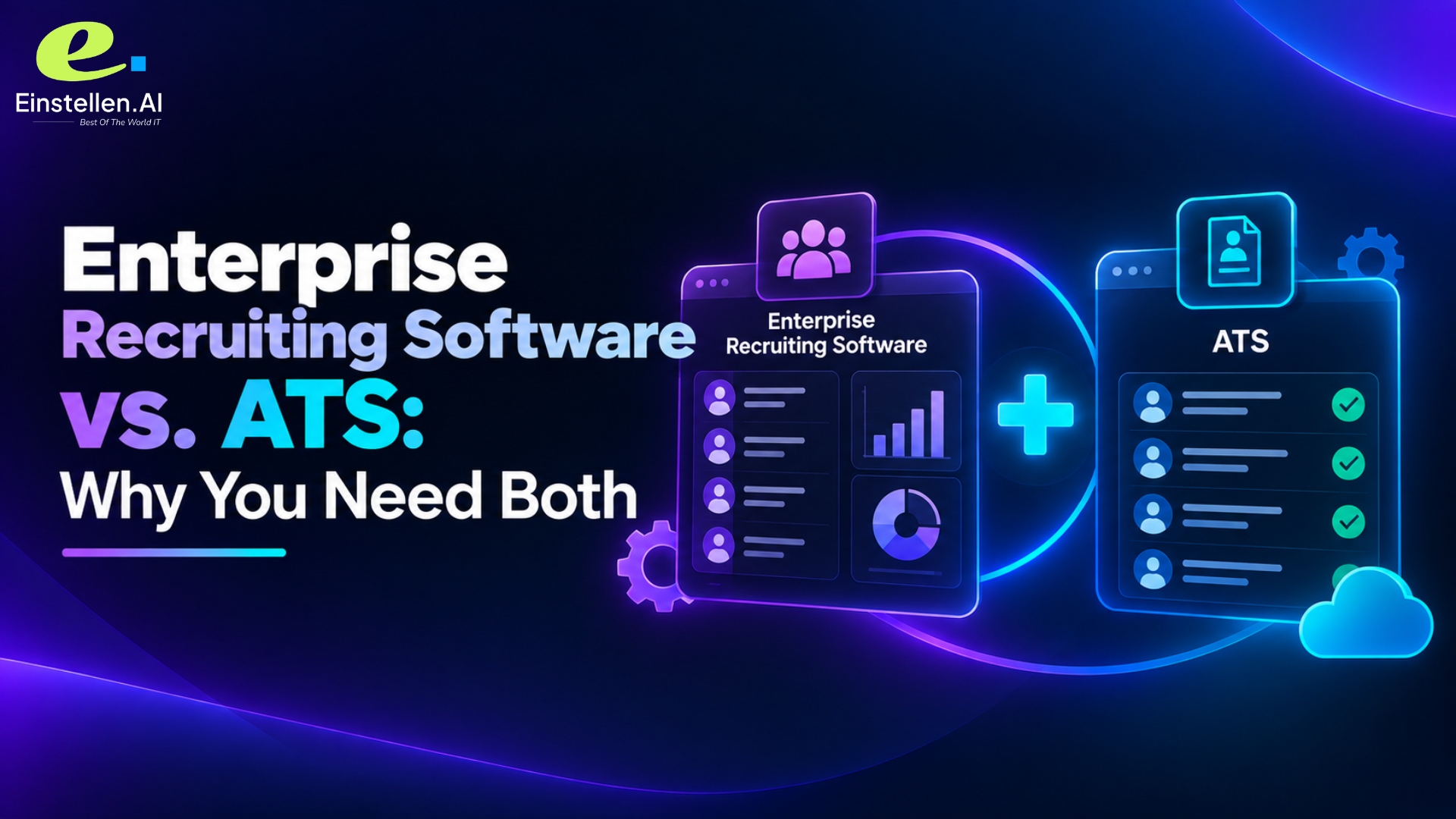
A bulk hiring drive that forces a recruiting team to learn a new system on top of their existing ATS adds friction at exactly the moment speed matters most. Magic OS integrates with whatever ATS a company is already using, and Greenhouse, Lever, and Workday are the three named on Einstellen.AI's Enterprise page as native, bi-directionally synced integrations, with scores, transcripts, and reports flowing straight into the existing candidate record.
 That means a bulk round doesn't require exporting spreadsheets or re-entering results somewhere else. Recruiters keep working inside the ATS they already use, and the adaptive interview data shows up where they already look for it. ATS integration is included at no additional cost, addressing a long-standing pain point: companies expecting to pay extra to make a new hiring tool talk to the system they already run.
Bulk Hiring by the Numbers
| Metric | Figure |
|---|---|
| AI interviews conducted on Einstellen.AI | 150,000+ |
| Institutions using the platform | 1,200+ |
| Native, bi-directionally synced ATS integrations named publicly | Greenhouse, Lever, Workday |
| ATS integration cost to client | Included, no additional cost |
| Platform interview pricing model | Flat ₹249 per interview, pay-as-you-go, credits never expire |
Proof point: Einstellen.AI has conducted 150,000+ AI interviews across 1,200+ institutions and is backed by IIM Lucknow and NASSCOM. MediAssist's enterprise deployment on the platform produced 92.5% fewer screening interviews required, a 15-day average fulfilment, a 100% position closure rate, and a 60% interview-to-deployment conversion; every score was delivered with a structured justification report, so hiring managers defended every shortlisting decision with documented evidence rather than a ranked number.
According to the World Economic Forum's Future of Jobs Report, employers are prioritising skills-based, structured assessment approaches as hiring volumes and role complexity both rise. That reinforces something worth sitting with: a defensible, per-candidate rationale matters more as scale increases, not less.
Key Fact: A static checklist cannot distinguish a strong, detailed answer from a rehearsed, surface-level one to the same fixed prompt, because the interview never asked a follow-up to find out which was which. Adaptive AI bulk hiring solves this at any volume.
FAQ
How is adaptive AI bulk hiring different from a black-box AI interview tool?
The core difference is explainability. A black-box tool spits out a ranking with no accessible reasoning behind it. Einstellen.AI's platform pairs every score with a structured justification report showing exactly what was asked, what was answered, and why a given score resulted; the interview itself adapts to each candidate's answers instead of running a fixed script.
Can candidates cheat an adaptive AI interview during a bulk round?
The platform includes fraud and proxy detection within the interview process itself, designed specifically for high-volume use cases such as campus placements and bulk enterprise hiring. Exact detection mechanics are kept general in public content on purpose, so the safeguards stay effective against people trying to work around them.
Does adaptive questioning slow down a high-volume hiring round?
No. The adaptive engine generates each subsequent question in real time based on the candidate's answer, so interview length scales with the conversation, not with recruiter availability. A 3,000-candidate round runs in parallel with the same per-candidate depth as a single-role screening, and it doesn't add recruiter hours to reach that depth.
Will adaptive AI interviews work with our existing ATS during a bulk round?
Yes. Magic OS integrates with any ATS a company already uses, at no additional cost, with Greenhouse, Lever, and Workday named as native, bi-directionally synced examples. Scores, transcripts, and reports flow directly into the existing candidate record, so a bulk round doesn't need a separate workflow bolted on.
Ready to Run a Bulk Hiring Round That Actually Holds Up?
If your next hiring round involves hundreds or thousands of candidates, a fixed-script tool will finish fast and tell you very little about who's genuinely strong. This is precisely how agentic AI handles bulk hiring at scale: adaptive questioning that goes deeper on every candidate, explainable scoring that holds up to scrutiny at any volume, and fraud detection that runs automatically alongside every interview. No fixed script. No manual verification step tacked on at the end.
See how the platform handles high-volume screening, or post your next bulk hiring round on Einstellen.AI and start reviewing structured, justified reports instead of an unexplained ranking.








Leave a Comment
Share your perspective. Comments are moderated before publishing.