Quick Answer: AI job portal cost ranges from $15/user/month to $300,000+/year, depending on vendor and scale (christianandtimbers.com). But the subscription is rarely the real cost. Implementation, integrations, training, and overages commonly add 20-100%+ on top (sprad.io). Einstellen.AI charges a flat ₹249 per interview, no contract, no hidden tiers.
Here's a scene that plays out constantly. A Talent Acquisition head signs an AI recruiting contract at a headline price. Six months in, the actual invoice looks nothing like the pitch deck: there's an ATS integration fee nobody flagged during the sales call, a training package the vendor called "recommended" (translation: mandatory), and an overage charge because the team ran more interviews than the tier allowed. That subscription number on the pricing page? Never the real cost. Just the opening bid.
This gap between quoted price and actual annual spend is the single most common complaint we hear from TA leaders evaluating AI hiring platforms. Below is what enterprises in India and globally actually pay, where the hidden costs hide, and why a no-contract, per-interview model changes the math entirely.
What AI Job Portal Pricing Per User Actually Looks Like
Published vendor pricing for AI recruiting software runs from $15 per user per month at the low end to enterprise packages exceeding $300,000 per year, according to a 2026 pricing comparison from Christian & Timbers. That range alone should tell you something: per-user pricing isn't a useful comparison point on its own. A 50-person startup and a 5,000-employee enterprise are buying fundamentally different products, even when the per-seat number looks identical on a sales deck.
Realistic 2026 enterprise budgets for AI recruiting tools run from roughly $1,000 a year for a lightweight ATS setup to $10,000–$30,000+ for a full sourcing and screening stack, per Sprad's 2026 pricing research. Why the huge spread? Because per-user pricing rarely accounts for hiring volume, and volume is the variable that actually drives cost for high-velocity hiring functions like campus placements or bulk enterprise rounds.
This is exactly why per-user and per-seat pricing models mislead buyers who hire seasonally or at scale. A company running 50 interviews a month pays very differently than one running 5,000, even at the identical per-seat rate. Pay-per-use pricing ties cost directly to actual usage instead of headcount or seat licenses. For high-volume Indian hiring functions, that's a meaningfully different cost curve, not just a different number.
AI Recruiting Software Hidden Fees Nobody Puts on the Pricing Page
Vendor pricing pages rarely show the full cost of getting a platform live. Implementation, ATS/HRIS integrations, SSO and security setup, training, data migration, premium support, and overage charges routinely get left off vendor pricing pages; the billing unit itself (per-seat vs. per-job vs. per-candidate) is often the bigger hidden variable, per HireTruffle's 2026 pricing analysis.
For large enterprise buyers, first-year implementation and integration commonly add a meaningful premium over the quoted annual subscription, often enough to materially change the real budget conversation. Do the math on that: a platform quoted at $100,000 a year can realistically cost $120,000 to $200,000 in year one once integration and onboarding are counted.
The single most common hidden fee in this category is ATS integration, and it's not close. Companies have historically been charged extra just to connect a new AI hiring tool to the ATS they already pay for and already use every day. It's become such a normalized cost that when we tell prospects our platform includes ATS integration at no additional charge, the typical reaction isn't mild interest. It's disbelief. Magic OS, Einstellen.AI's underlying platform, integrates with any ATS a company is already using, including native, bi-directionally synced integrations with Greenhouse, Lever, and Workday, at no additional cost.
The Hidden Cost No TCO Article Quantifies: Explainability Risk
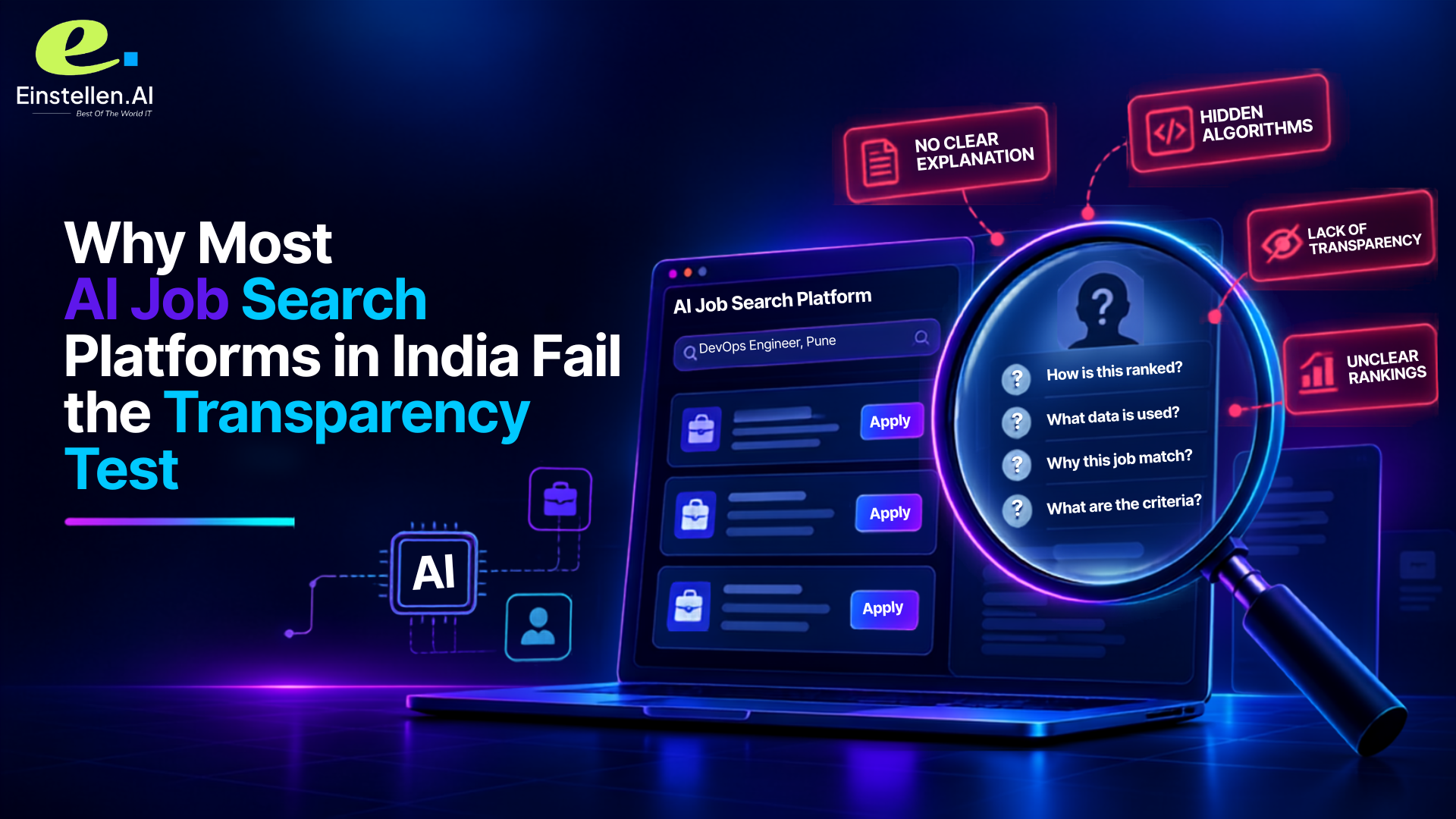
Every vendor pricing comparison in this category talks about integration fees and overage charges. None of them talk about the cost of a black-box score you can't defend in an audit, a compliance review, or a rejected candidate's appeal.
That's the real gap in how enterprises calculate AI job portal cost. When an AI interview platform produces a candidate ranking with no accessible reasoning behind it, the cost doesn't show up on an invoice. It shows up later, when a TA head has to explain to legal, or to a candidate, why a decision was made and has nothing but a number to point to.
TA heads who've tried multiple AI interview tools tell us the same thing over and over: scores that don't correlate with actual on-the-job performance, with no way to trace which answer drove which part of the result. That's not a pricing problem. It's a structural cost that only surfaces when something goes wrong, and by then it's far more expensive than any subscription fee ever was.
Einstellen.AI's MAGIC model produces a structured, justified score every time, never a standalone number. Each interview generates a full transcript and a per-answer scored report, so a hiring manager reviewing a borderline candidate, or defending a rejection, can point to exactly what was asked, what was answered, and why the score landed where it did. That report is an audit-ready asset. A black-box score is a liability waiting for the moment someone asks "why."
Contract Lock-In: The Cost Line Nobody Puts a Number On
Enterprise AI recruiting contracts are typically custom-quoted, meaning pricing gets negotiated behind closed doors instead of published anywhere. Vendors will call this flexibility. In practice, it's leverage: the buyer signs a multi-month or multi-year commitment before knowing what a comparable platform would even cost, and switching later means eating sunk cost.
Now compare that to a pay-per-use, no-contract model. Einstellen.AI's public list price is a flat ₹249 per AI interview, whether a company runs 1 interview or 10,000 in a month. No subscription. No volume negotiation. No multi-year lock-in. Every credit includes the full MAGIC Report: video, transcript, skill scoring, and fraud detection, with no premium add-on tier sitting behind it.
The strategic point here, for a TA head or a CFO looking at this, is pretty simple: a custom-quoted annual contract is a bet that usage stays flat and vendor satisfaction stays high for the whole contract term. A pay-per-use model removes that bet entirely. If the platform stops performing, your exposure is the last invoice, not the remaining eighteen months of a contract you're stuck in.
Reframing Cost-Per-Seat as Cost-Per-Quality-Hire
Most AI recruiting pricing comparisons stop at cost-per-seat or cost-per-interview. That framing misses the actual question a hiring manager should be asking: what did this interview actually tell me about the candidate?
A fixed-script AI interview asks the same five questions no matter how a candidate answers the first one. Sure, it produces a transcript. Not necessarily a useful one, though. Einstellen.AI's humAIn engine works differently: it conducts interviews using autonomous adaptive questioning, listening to what a candidate actually said and generating the next question based on that answer, rather than marching through a script regardless of the conversation. If a candidate gives a vague answer about a specific project, the system probes deeper on that exact project instead of jumping to an unrelated scripted question.
 That difference changes what "cost per interview" actually buys you. A ₹249 fixed-script interview and a ₹249 adaptive interview are not the same product, even at an identical price tag. The adaptive interview produces signal closer to what a skilled human interviewer would extract in the room. Cost-per-hire only becomes a meaningful number once you account for the quality of the underlying signal, not just what's on the invoice.
What Enterprises Actually Pay: A Cost Comparison
| Cost Category | Typical Vendor Model | Einstellen.AI Model |
|---|---|---|
| Base pricing | $15/user/month to $300,000+/year (christianandtimbers.com) | ₹249 flat, per interview |
| Contract structure | Custom-quoted annual contract, negotiated | No contract, no volume commitment |
| ATS integration | Frequently a separate paid add-on | Included at no additional cost, any ATS |
| Implementation/integration | Adds 20-100%+ of annual subscription in year one (sprad.io) | No separate implementation fee |
| Scoring output | Often a ranking with no accessible reasoning | Structured, justified score with full transcript per interview |
| Fraud/proxy detection | Varies by vendor, often a premium tier | Included in every credit |
Proof point: Einstellen.AI's AI interview engine has conducted 30,000+ interviews across 1,200+ institutions, with every score paired to a structured justification report, not a standalone number.
FAQ
How much does AI recruiting software cost for enterprises?
Published enterprise pricing ranges from $15 per user per month to $300,000+ per year depending on vendor and scale (christianandtimbers.com). Realistic enterprise budgets run from roughly $1,000 a year for a lightweight setup to $10,000–$30,000+ for a full sourcing and screening stack, per Sprad's 2026 pricing research. Einstellen.AI's model is different: a flat ₹249 per interview with no subscription, so cost scales directly with usage rather than a negotiated annual figure.
What hidden costs come with AI hiring platforms?
Implementation, ATS/HRIS integration, SSO and security setup, training, data migration, and overage charges routinely get left off vendor pricing pages; the billing unit itself (per-seat vs. per-job vs. per-candidate) is often the bigger hidden variable, per HireTruffle's 2026 pricing analysis. For large buyers, first-year implementation and integration commonly add a meaningful premium over the quoted annual subscription. Einstellen.AI includes ATS integration with any platform at no additional cost.
Is AI job portal pricing per user, per job, or per candidate?
Depends on the vendor: some charge per user seat, others per job posting, others per candidate processed. Einstellen.AI uses a fourth model entirely: pay-per-interview at a flat ₹249 rate, tying cost directly to actual interview volume rather than headcount, job count, or a negotiated tier.
Do AI hiring tools require long-term contracts?
Many enterprise AI recruiting vendors require custom-quoted annual or multi-year contracts, negotiated individually per account. Einstellen.AI doesn't. Its ₹249 per-interview rate is open, public list pricing with no subscription and no volume commitment, whether a company runs one interview or ten thousand.
Post a Role and See the Real Cost Difference
Most AI recruiting cost comparisons ask you to request a quote before you even know what you're comparing against. Einstellen.AI's pricing is just public: ₹249 per interview, every MAGIC Report included, any ATS connected at no extra charge.
If your team is evaluating AI job portals and wants to compare real cost against a real, explainable alternative, post a role on Einstellen.AI and see the structured justification report for yourself before committing to anything. No contract required to find out.






Leave a Comment
Share your perspective. Comments are moderated before publishing.